How do real-world socioeconomic cues shape who we remember?
Across four experiments, I examined how real-world socioeconomic cues influence person recognition and challenged findings from decades of research using standardized face images.
Project at a Glance
ROLE
Lead Researcher
SCOPE
8 Experiments
PARTICIPANTS
2000+ participants
METHODS
Theory Based Evaluation
Causal Inference
Signal detection
The Challenge
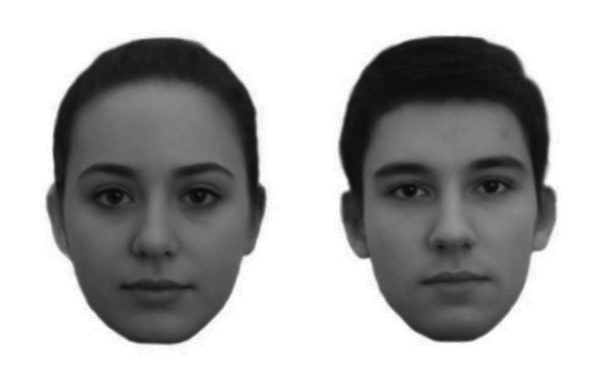
Industry and academic frameworks rely on artificial perceptual data, creating a critical blind spot in how people actually process social status in natural environments.
The Context
Socioeconomic status (SES) shapes critical organizational and societal outcomes, influencing hiring decisions, leadership selection, and institutional evaluation. To optimize policy and workplace interventions, organizations must understand how people visually evaluate social class.
The Complication
Existing behavioral models assume high-status individuals receive privileged cognitive processing and higher memory recall. However, these frameworks rely on artificial, lab-controlled face stimuli that lack real-world context. In real-world environments, visual signals like clothing, body posture, and facial affect heavily dictate threat perception and memory allocation.
The Behavioral Problem
Does the established "high-SES memory advantage" hold in naturalistic settings, or do real-world nonverbal cues activate hypervigilance that systematically shifts how social status is remembered?
Images Typically Used in Social Perception Research
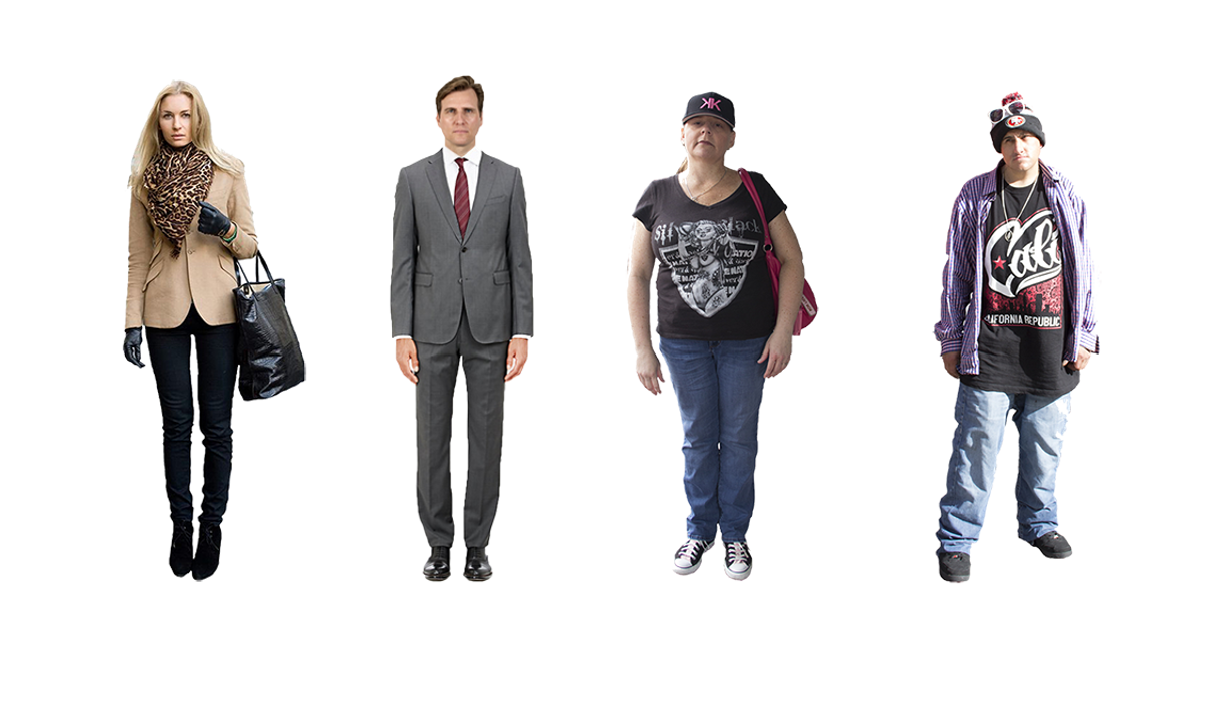
Images Used in This Study
What I Did
What I Did
ROLE
Lead Researcher
ROLE
Lead Researcher
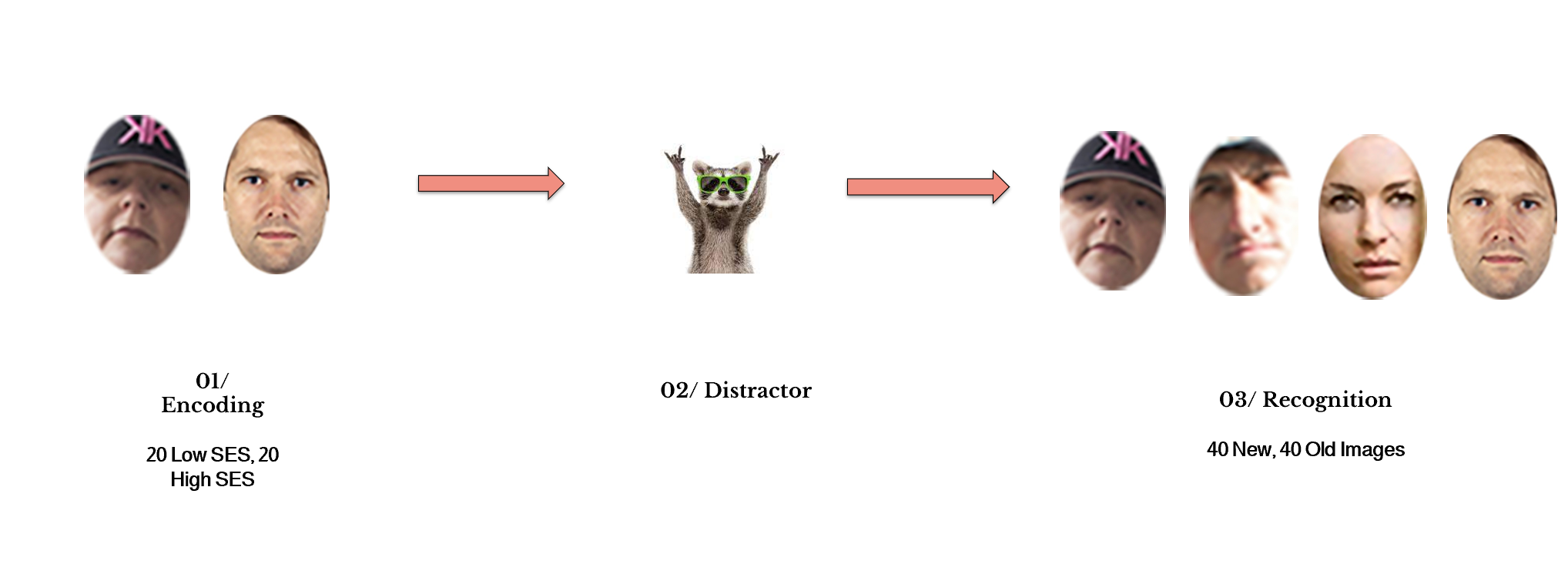
Isolating SES recognition employing novel, naturalistic images using a controlled 3-stage recognition paradigm.
Cue Isolation
Systematically stripping visual information across experiments to identify the exact signal driving status recognition.
02/ Distractor
Participants completed a brief distractor task to prevent active working memory rehearsal.
03/ Recognition
Evaluated memory bias (d') across 80 old vs. encoding target profiles.
ROLE
Lead Researcher
01/ Encoding
Target images presented for 1 second to capture spontaneous visual encoding.
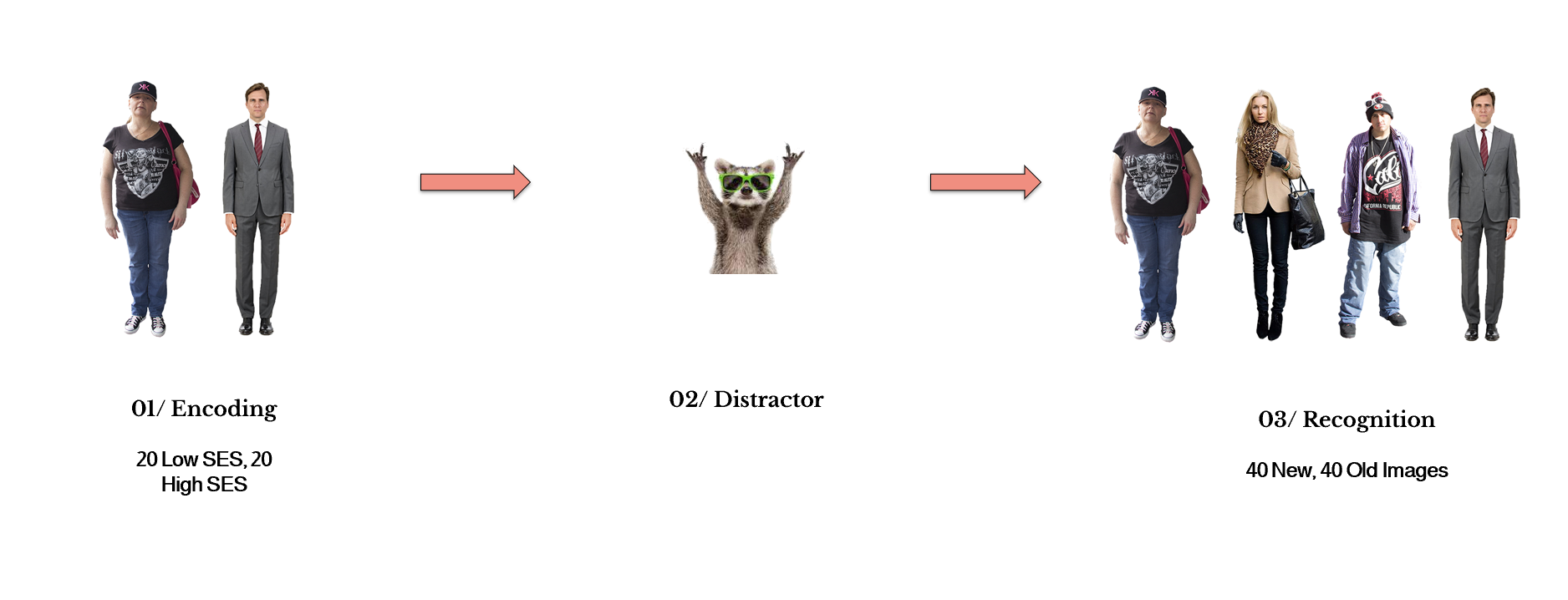
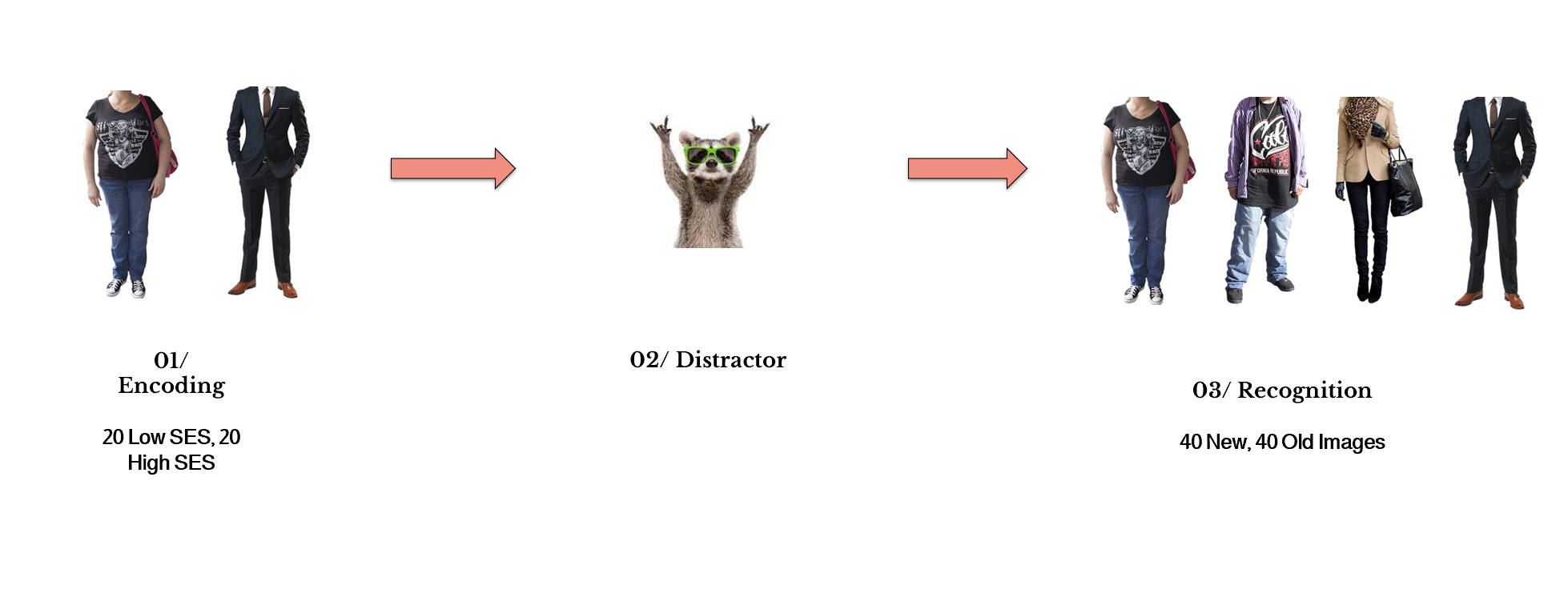
Standard research isolates the face, but real-world perception is holistic. To test which visual signals drive recognition accuracy, I replicated the 3-stage paradigm across three target variations:
Full-Body Targets: Captures real-world ecological validity (combining clothing, posture, and facial affect).
Body-Only Targets (Head Cropped): Isolates socioeconomic status signaled purely through attire, fit, and posture.
Face-Only Targets (Body Cropped): Mirrors traditional laboratory conditions to evaluate whether facial affect alone accounts for status memory.
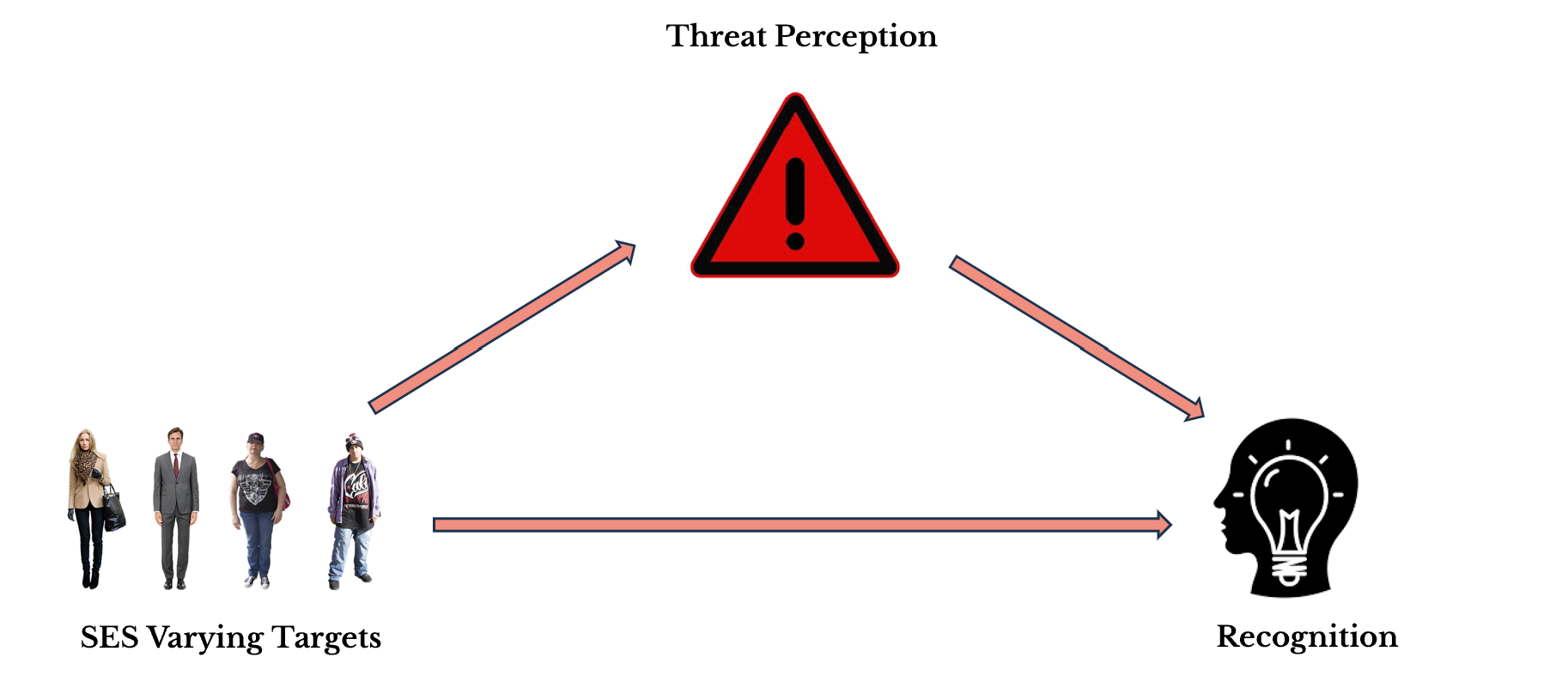
THREAT MEDIATION
Evaluating whether threat salience explains shifts in memory sensitivity (d') across visual cue conditions.
To test whether naturalistic, ecologically valid images elicit additional social attributes that can influence memory patterns, participants provided subjective ratings of Perceived Threat for each profile alongside the core recognition task.
Using linear mixed-effects mediation models, I evaluated whether perceived threat serves as an explanatory mechanism (a×b indirect effect) between visual status signals and cognitive recall accuracy (d′). This isolated whether hypervigilance toward threat drives recognition advantages when full-body contextual cues are present.
What I Found
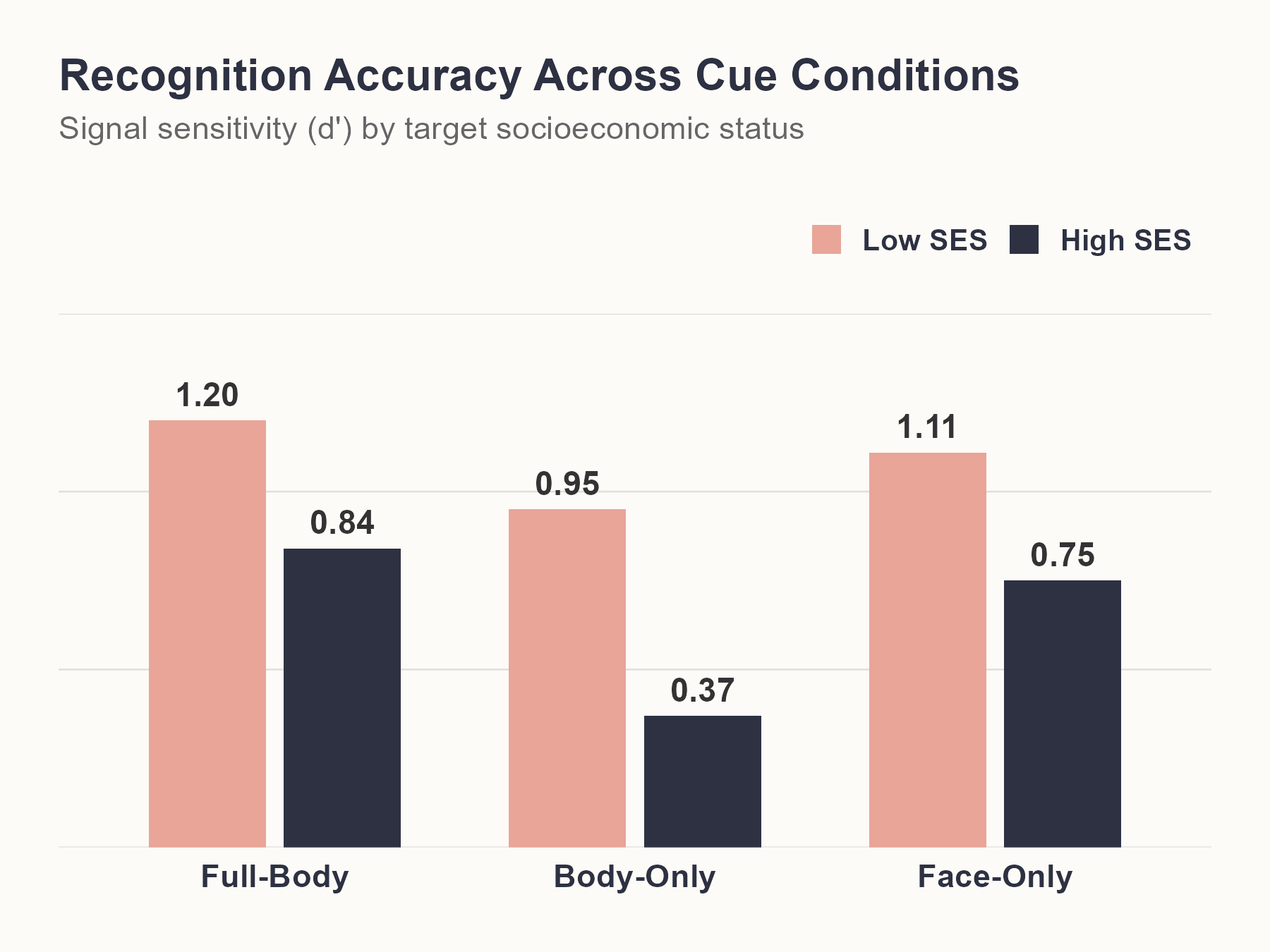
Naturalistic Stimuli Reverses Traditional Lab Models
Presenting participants with naturalistic, ecologically valid stimuli reversed decades of research on SES perception—across all three conditions, low SES targets were recognized significantly more than high SES targets.
Low SES Targets Recognized Significantly More: Low-SES targets saw a consistent, statistically significant boost in recognition accuracy (d') across all three cue conditions.
Body Cues Drive Primary Shift: Body-only targets produced the starkest divergence (d' = 0.95 vs. 0.37), proving attire is the main driver of status memory bias.
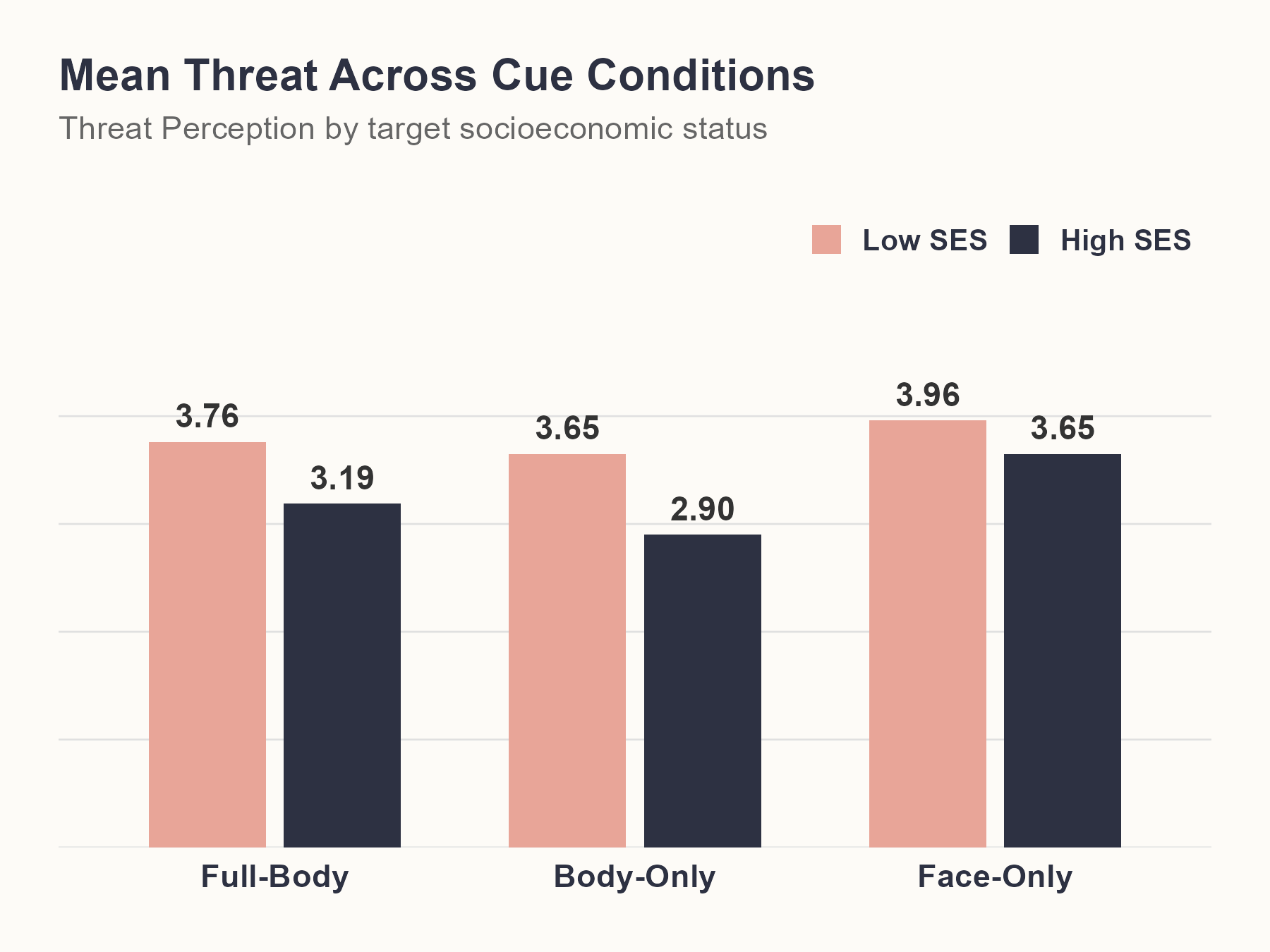
Perceived Threat Drives Selective Memory Encoding
Subjective threat ratings revealed that lower-SES targets consistently trigger higher perceived threat across all visual conditions. However, this threat response only translates into heightened recognition accuracy when full-body contextual information is available.
Universal Threat Bias Across Conditions: Lower-SES profiles were rated significantly higher in perceived threat across all cue types.
Context-Dependent Mediation: Statistical mediation analysis confirmed that perceived threat only mediated recognition accuracy (d') and person recognition in the Full-Body condition.
The Mechanism: Threat perception acts as a necessary catalyst, but it requires holistic visual context (clothing + posture) to convert threat-induced hypervigilance into concrete memory recall.
Why it Matters
Policy & Applied Impact: Translating cognitive mechanics into systemic interventions, bias reduction, and ecologically valid behavioral diagnostics.
Proving that attire instead of facial affect drives threat-mediated hypervigilance provides direct operational leverage for applied behavioral units, global development institutions, and public policy.
Mitigating Frontline Administrative & Institutional Bias: Demonstrating that lower-SES attire triggers threat hypervigilance offers a blueprint for auditing high-stakes environments (e.g., judicial screening, law enforcement, and social safety net delivery) to standardize protocols and reduce discretionary caseworker bias.
Elevating Behavioral Diagnostic Standards: Replaces outdated testing models with rigorous, multi-condition experimental frameworks that yield actionable, market-ready consumer insights.
Improving Synthetic Data & Generative AI: Demonstrates how generative visual models must represent contextual cues (attire and posture) accurately to evoke authentic, bias-aware human cognitive responses in AI-driven simulations.
Selected Outputs

PRE-REGISTRATION [ VIEW PREREGISTRATION → Here ]
As. Predicted
Documented hypotheses, sample size calculations, and analytical plans prior to data collection across studies 2a-2c.

CODE & DATA REPOSITORY [ VIEW CODE AND DATA →
Available upon request ]
Github Repository
Contains clean R scripts for linear mixed-effects modeling, mediation analyses, ggplot2 visualizations, signal detection analysis, t-tests, and anonymized raw datasets.

MANUSCRIPT DRAFT [ IN PREPARATION ]
Working Paper (Journal Article) "Low-SES targets are remembered better: Naturalistic stimuli reverse the high-SES recognition advantage" . Full manuscript detailing experimental methodology, multi-level mediation models, and theoretical implications (Available upon request).