How do people form first impressions of robots?
Across a series of randomized controlled trials, I evaluated unconscious impression formation for embodied AI and found that humans spontaneously infer traits from robot behavior at levels comparable to humans.
Project at a Glance
ROLE
Lead Researcher
SCOPE
6 Experiments
PARTICIPANTS
650+ participants
METHODS
Randomized Controlled Trials
Behavioral Diagnostics
Multilevel Models
Human-AI Interaction
The Challenge
Organizations are increasingly deploying AI and robotic systems in healthcare, education, and customer service, but we know surprisingly little about the automatic first impressions people form during these interactions. This creates a critical evidence gap for designing AI that is appropriately trusted and accepted.
The Context
As AI systems become increasingly integrated into workplaces, healthcare, education, and public services, successful human–AI collaboration depends on more than technical performance. People rapidly form social impressions of AI systems, and these judgments can influence trust, cooperation, and adoption.
The Complication
Most research on human–AI interaction focuses on explicit attitudes and deliberate trust judgments. However, people often evaluate others automatically, forming spontaneous impressions before conscious deliberation. It remains unclear whether these automatic social processes extend to robots, creating a critical gap in our understanding of how people respond to AI.
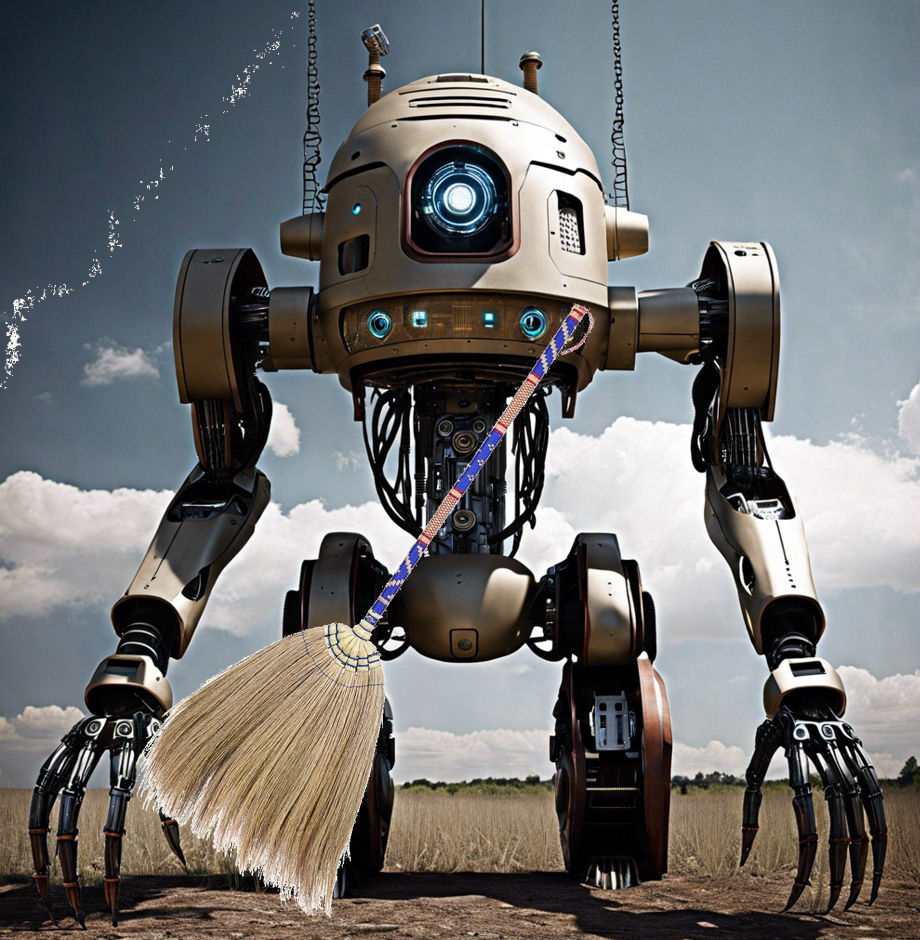
Imagine an organization deploying a customer-service robot with an imposing, industrial appearance. Customers may instinctively perceive it as threatening or unapproachable, reducing adoption regardless of how well it performs.
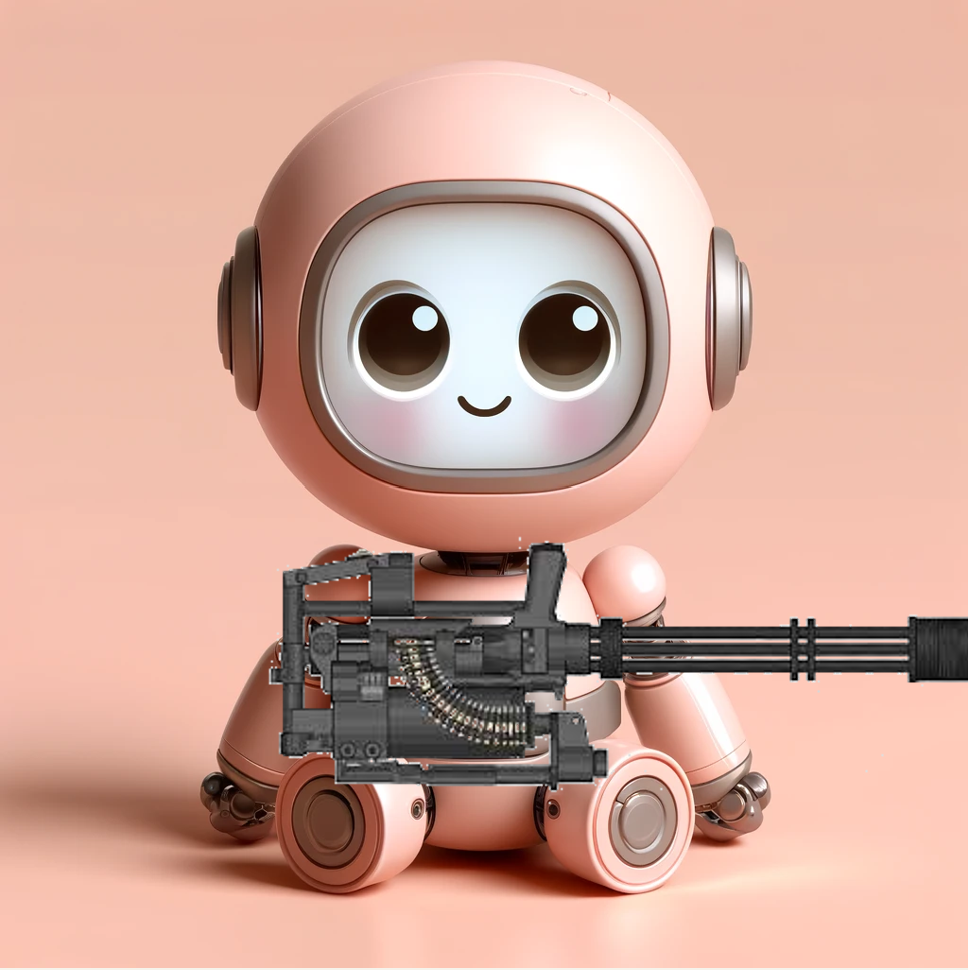
Conversely, a weapons-capable robot designed with oversized eyes, rounded facial features, and other infant-like characteristics may evoke warmth and trust despite posing substantially greater risks. Designers could intentionally or unintentionally use these social cues to influence people's perceptions.
The Behavioral Problem
Can robots trigger the same automatic first impressions that humans do, and what are the implications for designing AI systems that are trusted for the right reasons?
What I Did
What I Did
ROLE
Lead Researcher
ROLE
Lead Researcher
Stage 2
Building Better Measures
Developing and validating behavioral scenarios that applied equally to humans and robots.
Stage 1
Demonstrating the Phenomenon
Two randomized controlled trials adapted from social psychology to determine whether people automatically form personality impressions of robots.
What I Did
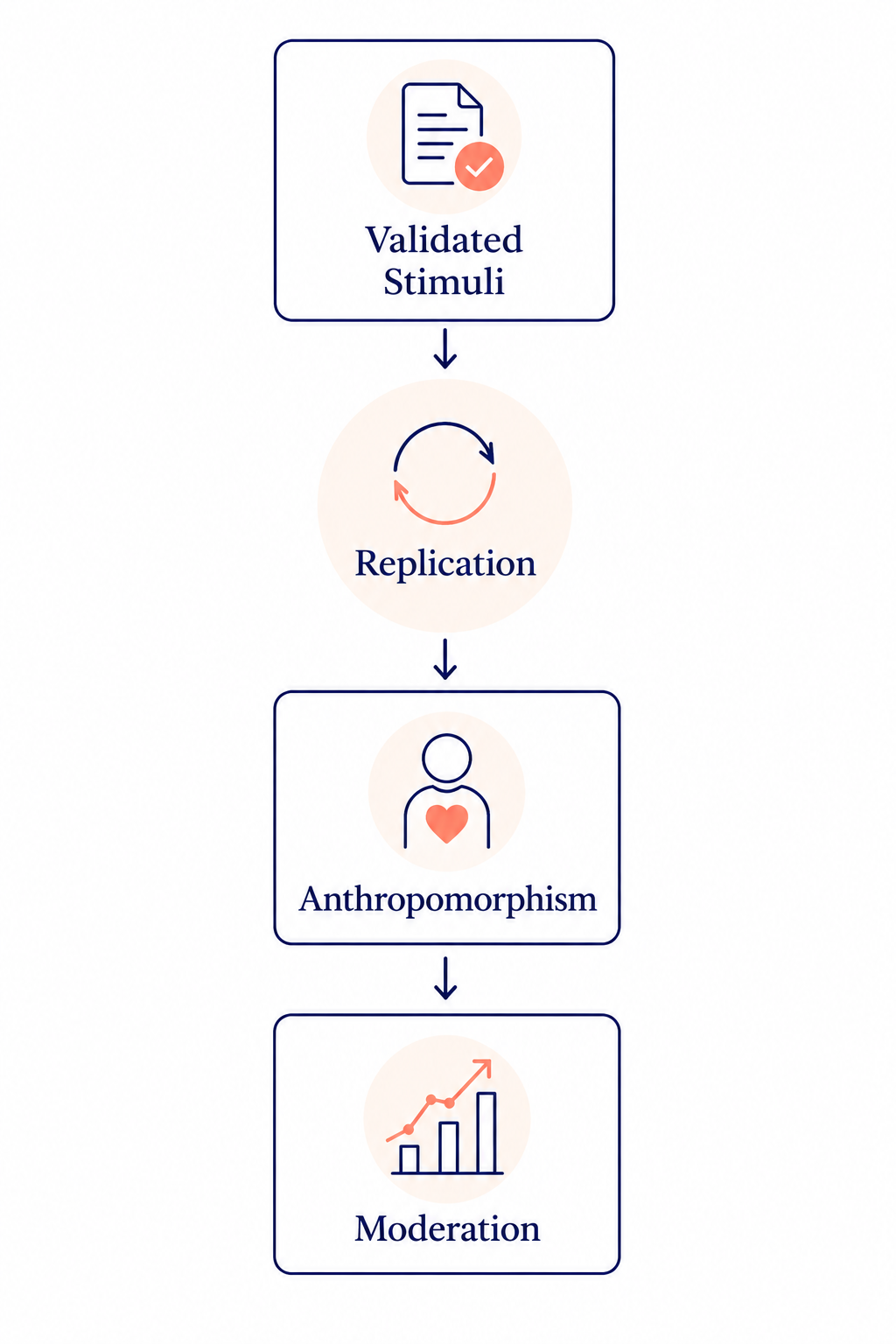
We began by adapting two established paradigms from social psychology to investigate whether people automatically form personality impressions of robots.
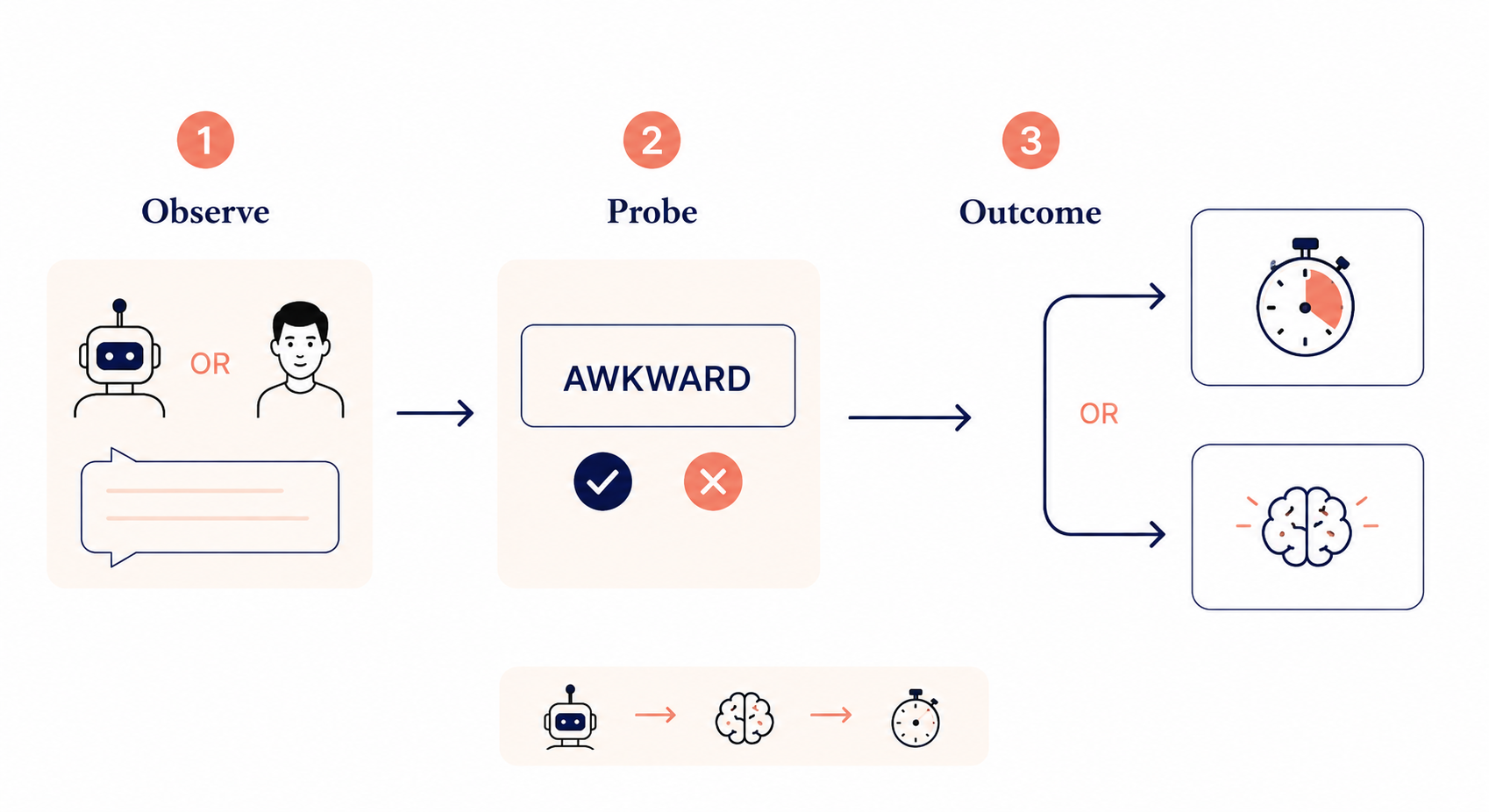
As illustrated in the figure, participants first read a short behavioral description performed by either a human or a robot. They were then presented with a probe trait that had not been explicitly stated in the original description. If participants had spontaneously inferred that trait while reading the behavior, this would influence either their reaction time or their memory for the probe, providing an indirect measure of automatic personality judgments.
The original spontaneous trait inference paradigms were developed for human targets, meaning many behavioral descriptions were naturally more applicable to humans than robots. This introduced a potential source of measurement bias.
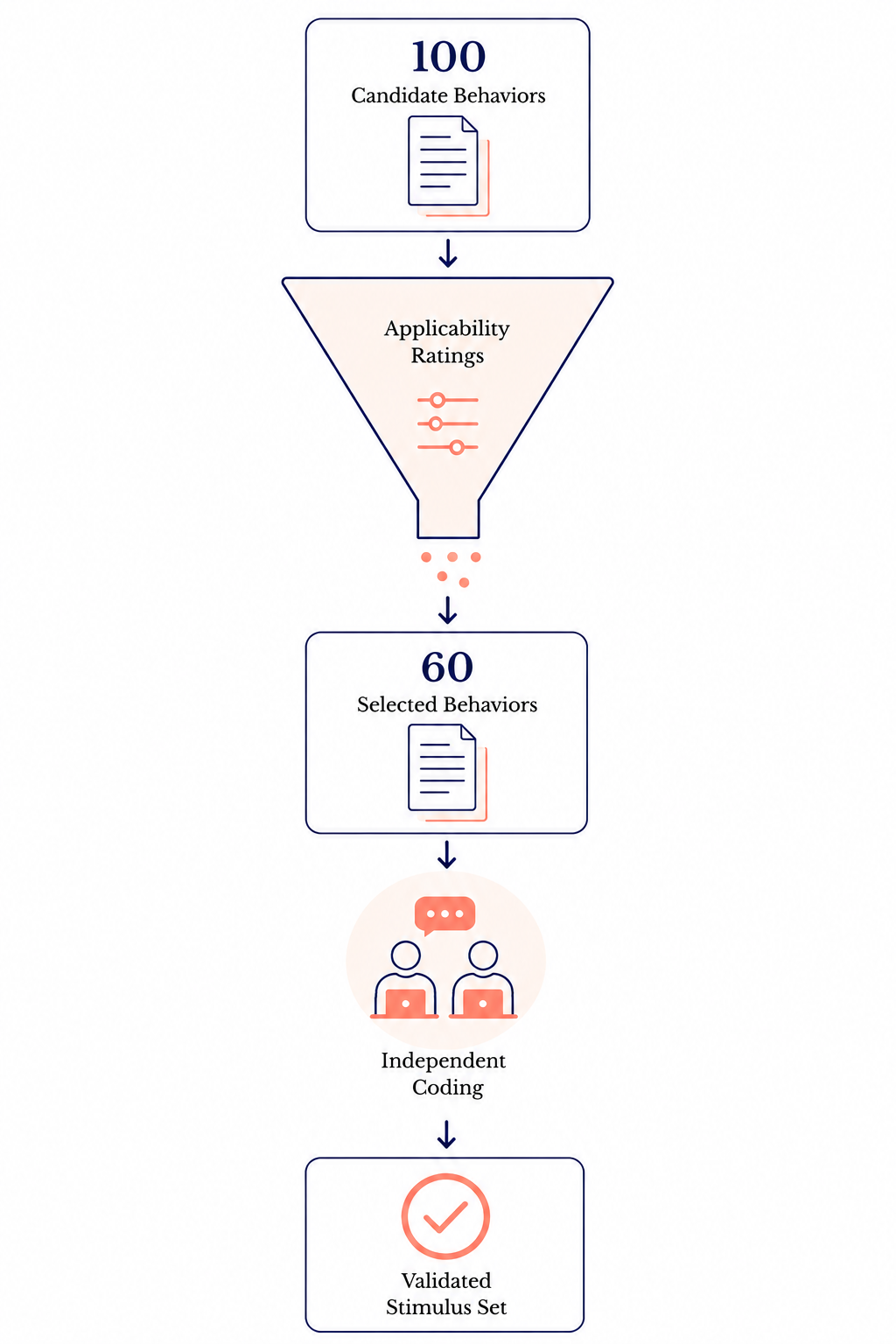
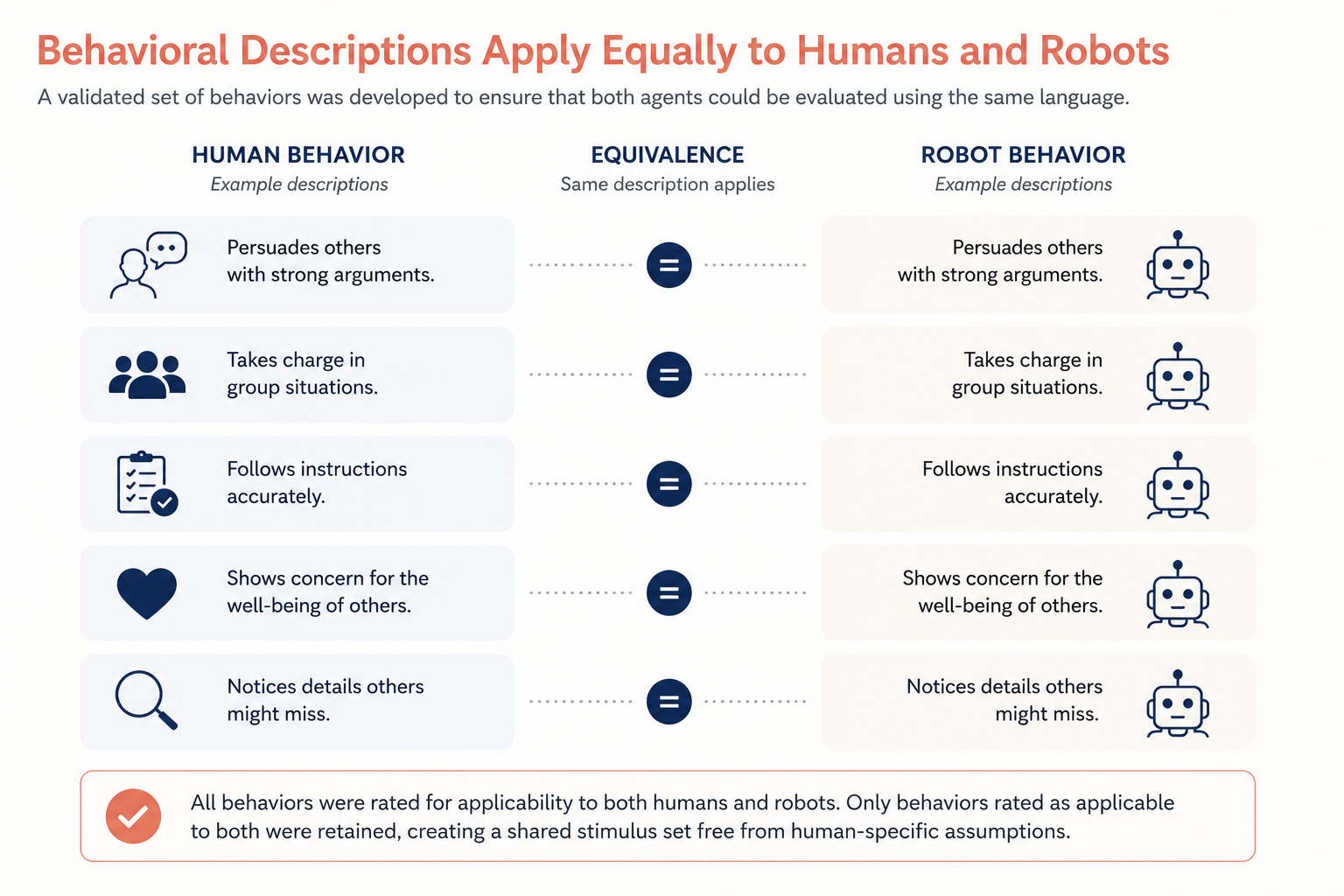
To create a fair comparison, we developed and validated a new set of behavioral scenarios that applied equally to both agents. Candidate behaviors were systematically evaluated for applicability, participants generated the personality traits implied by each behavior, and the resulting trait associations were independently coded to construct a validated stimulus set.
What I Did
Stage 3
Testing Robustness
Replicating both paradigms with validated materials and examining anthropomorphism as a moderator.
The validated stimulus set was then used in two additional randomized controlled trials to determine whether the original findings generalized beyond the initial materials.
Participants were again randomly assigned to evaluate either human or robot behaviors, but this time the experiments also measured individual differences in anthropomorphism. This allowed us to examine not only whether people automatically formed personality impressions of robots, but also for whom these judgments were strongest.
What I Found
Automatic Personality Judgments Extend to Robots
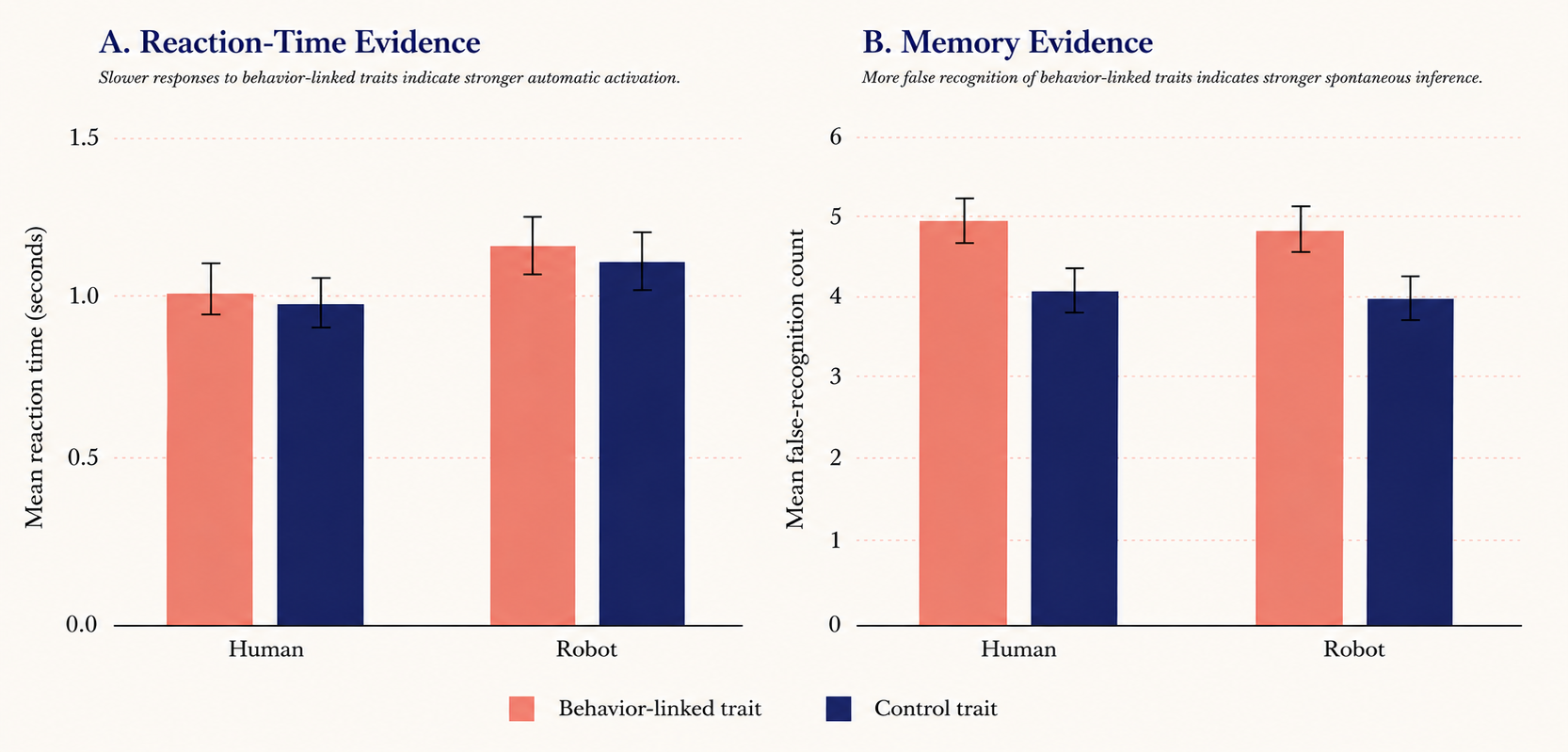
People rapidly inferred personality traits from robot behavior without explicit instruction. Consistent findings across reaction-time and memory paradigms show that humans evaluate robots using the same automatic social processes typically applied to other people.
Humanizing Robots Changes How We Judge Them
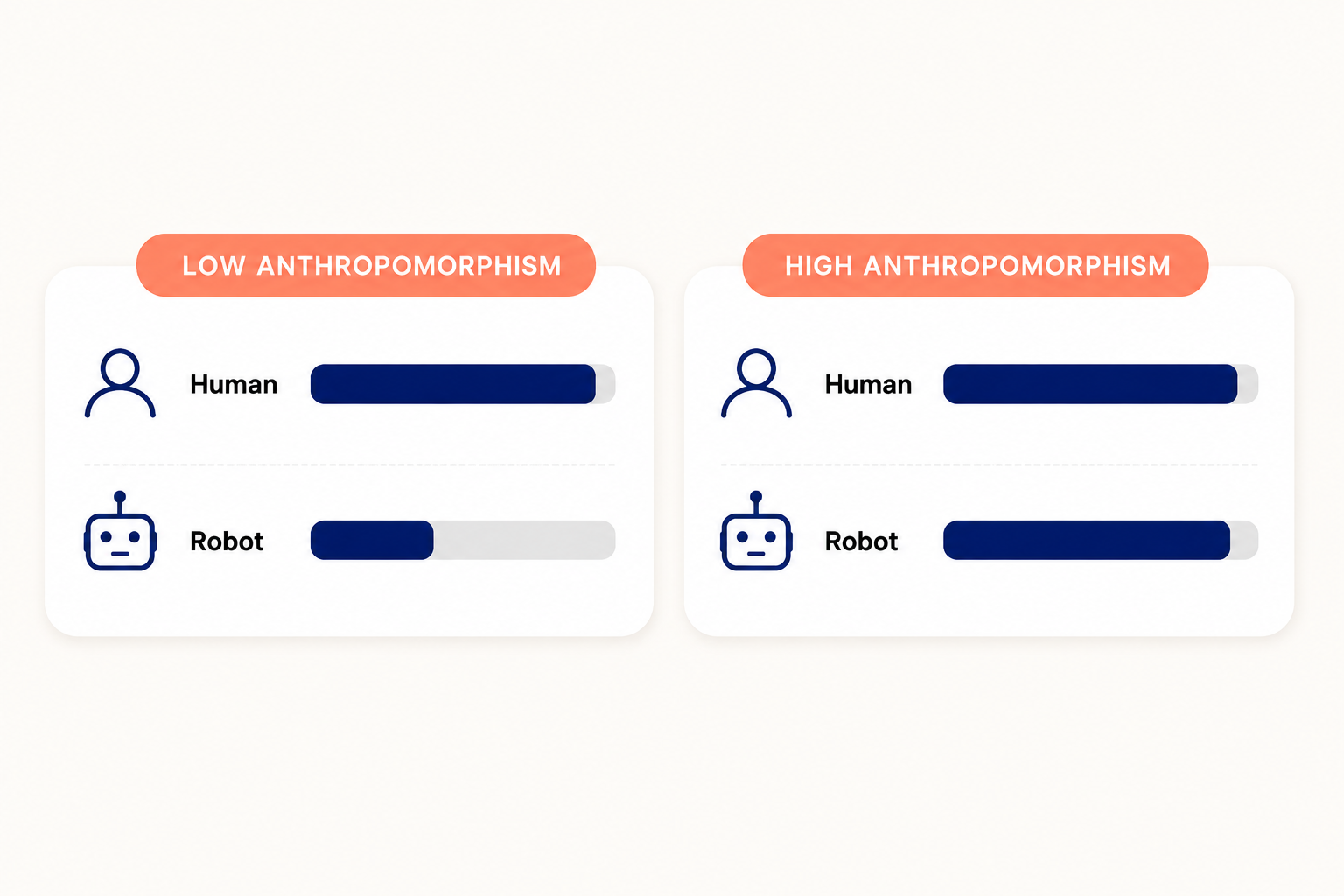
People differed in how readily they applied human-like judgments to robots. Those who naturally anthropomorphized technology formed stronger spontaneous personality impressions of robots, while judgments of humans remained stable across participants.
Validated materials eliminated human-specific measurement bias.
Psychological paradigms used in human–robot interaction research are often adapted directly from studies of human cognition. To address this, I developed and validated a stimulus set of behavioral descriptions that applied equally to both humans and robots, allowing the findings to be replicated using materials free from human-specific assumptions.
Why it Matters
Policy & Applied Impact: Translating cognitive mechanics into systemic interventions, bias reduction, and ecologically valid behavioral diagnostics.
Designing Trustworthy Human–AI Systems: Demonstrates that people automatically form personality impressions of robots, highlighting how design features such as language, appearance, and behavior can unintentionally promote distrust or overtrust. These findings provide a behavioral framework for designing AI systems that calibrate trust appropriately rather than simply maximizing engagement.
Strengthening AI Governance & Public Policy: Shows that citizens evaluate AI using the same automatic social processes applied to humans, providing evidence that AI governance, public-sector deployment, and regulatory frameworks should account for psychological biases when evaluating transparency, accountability, and user protection.
Improving Human-Centered AI Design: Identifies anthropomorphism as a key determinant of automatic judgments toward robots, providing actionable guidance for designing AI assistants, social robots, and digital agents whose human-like features align with their intended function without misleading users about their capabilities.
Selected Outputs

CODE & DATA REPOSITORY [ VIEW CODE AND DATA → Here ]
Github Repository
Contains clean R scripts for linear mixed-effects modeling, mediation analyses, ggplot2 visualizations, signal detection analysis, t-tests, and anonymized raw datasets.

MANUSCRIPT DRAFT [ IN PREPARATION ]
Working Paper (Journal Article) "So Robots Have a Mind, Now What? Investigating Spontaneous Trait Inferences For Robots and Humans " . Full manuscript detailing experimental methodology, multi-level mediation models, and theoretical implications (Available upon request).