Identifying Behavioral Bottlenecks to Economic Mobility in India
Across three randomized experiments, I investigated how cultural cues in faces and names shape socioeconomic perceptions and hiring decisions in India.
Project at a Glance
ROLE
Lead Researcher
SCOPE
6 Experiments
PARTICIPANTS
650+ participants
METHODS
Randomized Controlled Trials
Behavioral Diagnostics
Causal Inference
The Challenge
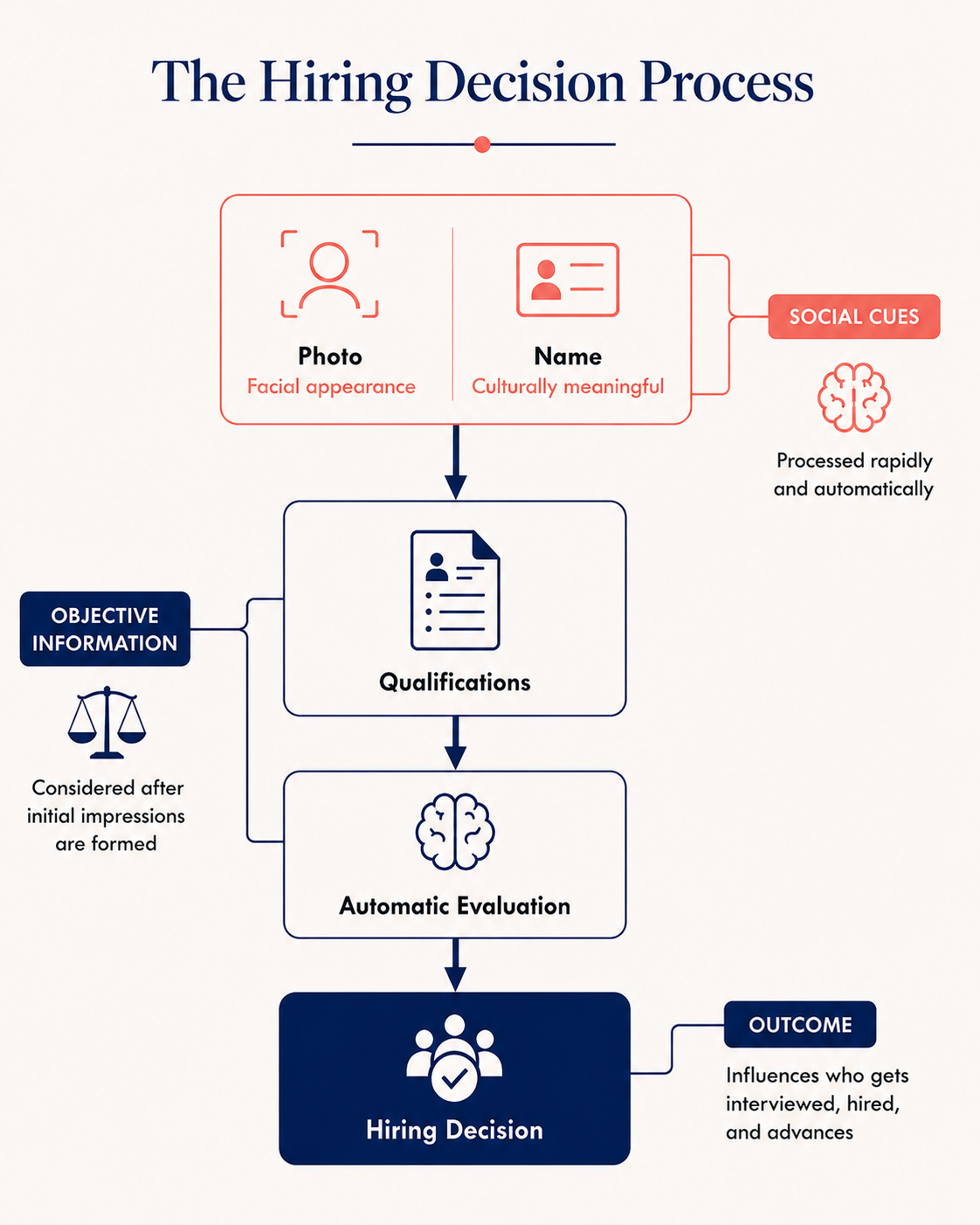
Organizations increasingly rely on structured hiring processes to identify the best candidates, yet recruiters often form rapid first impressions before evaluating qualifications. Understanding how culturally meaningful cues influence these judgments is essential for designing fairer recruitment systems and expanding economic opportunity.
The Context
Access to employment is one of the strongest determinants of long-term economic mobility. While organizations strive to make hiring decisions based on merit, recruiters frequently evaluate applicants under time pressure using incomplete information, making them susceptible to rapid social judgments.
The Complication
Research has shown that people infer traits such as competence and warmth from facial appearance, but relatively little is known about how culturally specific signals of socioeconomic status combine to influence hiring decisions. In countries such as India, facial appearance and names both communicate rich social information that may shape perceptions long before a candidate's qualifications are considered.
Imagine two applicants with identical résumés applying for the same managerial position. One has a name and facial appearance commonly associated with higher socioeconomic status, while the other is associated with lower socioeconomic status. Even when qualifications are identical, recruiters may unconsciously infer differences in competence, leadership potential, or organizational fit before reviewing either application. These subtle first impressions can accumulate across thousands of hiring decisions, creating behavioral barriers to economic opportunity.
The Behavioral Problem
How do culturally meaningful cues influence first impressions during hiring, and can these rapid judgments create systematic barriers to fair employment decisions?
What I Did
What I Did
Stage 2
Testing Behavioral Generalizability
Examining whether socioeconomic judgments persist across cultural contexts.
Stage 1
Conducting Behavioral Diagnostics of Socioeconomic Bias in India
Identifying the visual and identity cues driving socioeconomic first impressions.
What I Did
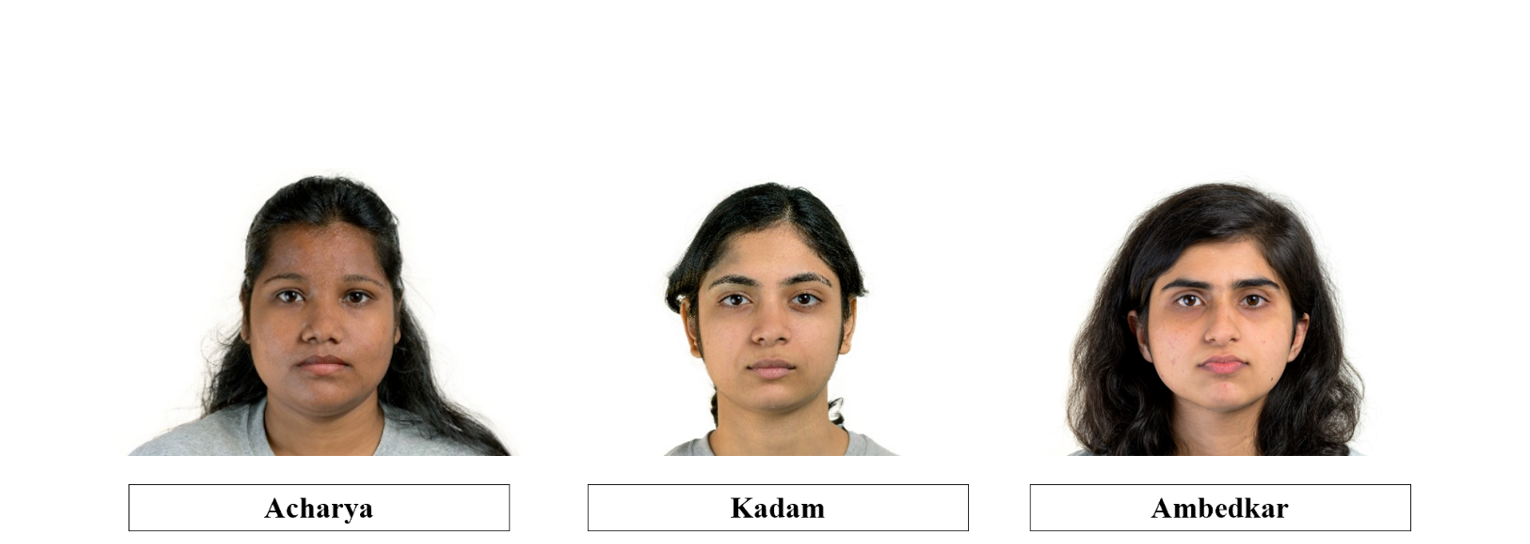
We first examined whether people use facial appearance and names to infer an applicant's socioeconomic status. In India, skin tone is often associated with colorism, while surnames frequently signal caste, a historically important social stratification system. Participants evaluated the perceived socioeconomic status of randomized profiles in which appearance (skin tone) and semantic (caste-based surname) cues varied independently, allowing us to isolate the contribution of each cue to first impressions.
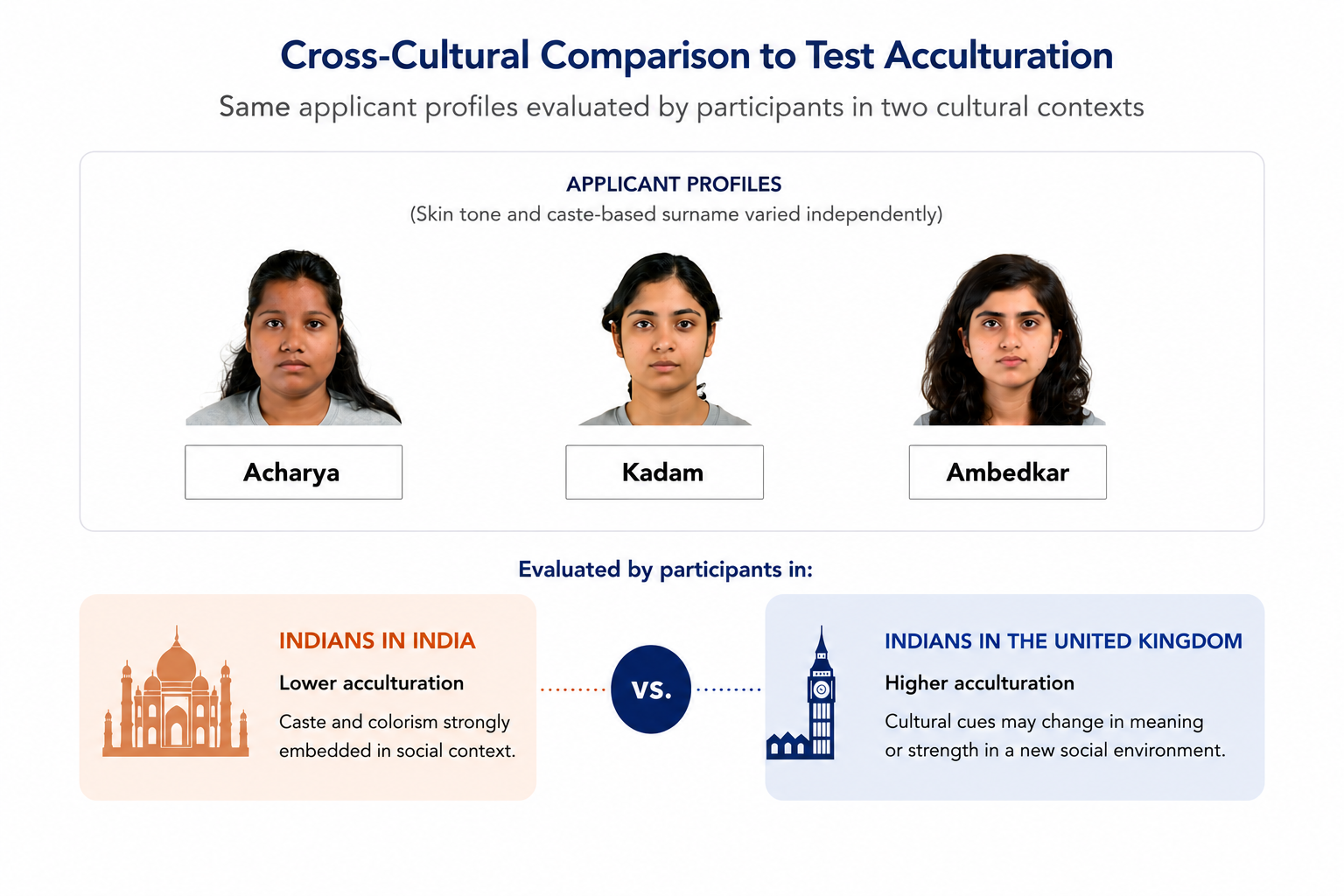
We next examined whether cultural exposure altered socioeconomic judgments by comparing Indians living in India and the United Kingdom. This enabled us to test whether acculturation moderated the influence of culturally meaningful cues on first impressions.
We considered two competing possibilities. Acculturation could attenuate bias by reducing the social relevance of cues such as caste-based surnames outside India. Alternatively, migration might reinforce other biases. Because lighter skin is frequently associated with beauty and social advantage across many Western contexts, exposure to these norms could strengthen color-based socioeconomic judgments even as caste-related associations weaken.
What I Did
Stage 3
Testing Real-World Hiring Decisions
Determining whether first impressions influence hiring for jobs belong to different levels of occupational prestige.
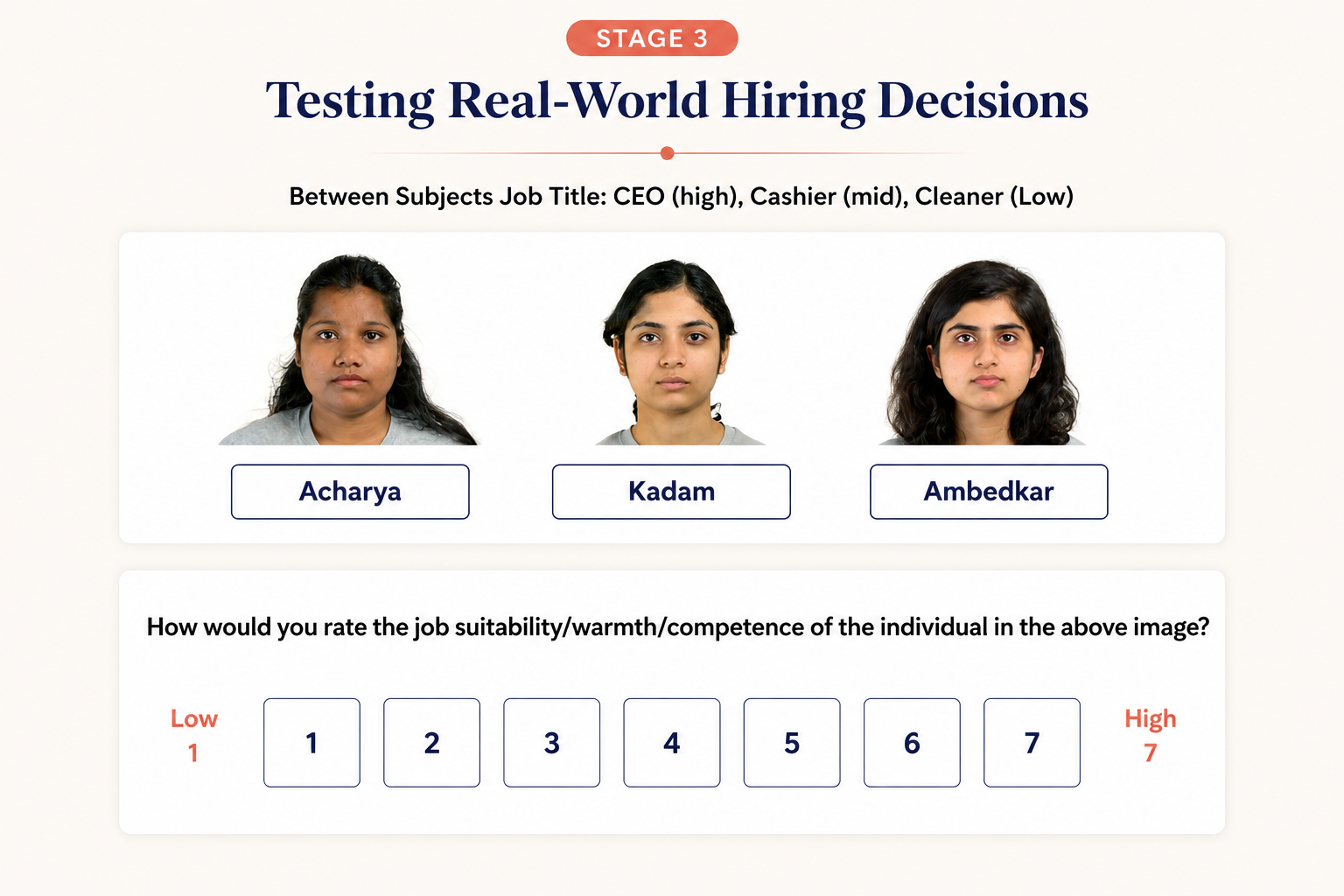
We translated the behavioral diagnostics from Stages 1 and 2 into a randomized controlled trial to test whether socioeconomic cues could influence candidate evaluation even when qualifications were held constant.
We independently randomized two culturally meaningful signals—skin tone (fair, medium, or dark) and caste-associated surname (upper or lower caste)—across candidate profiles. Participants evaluated candidates for one of three occupations representing different levels of job status: CEO, cashier, or cleaner.
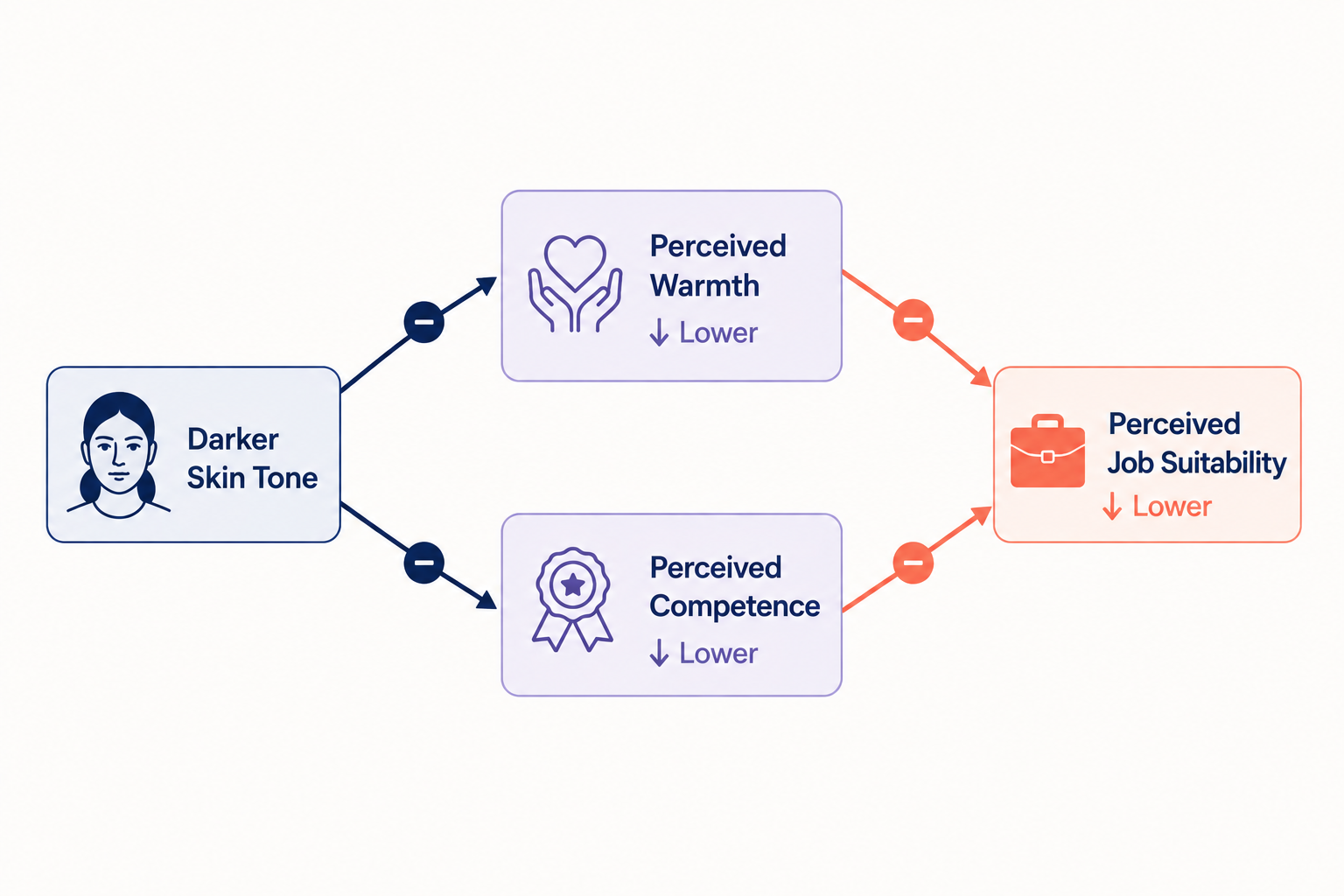
For each candidate, we measured job suitability, warmth, and competence. This design allowed us to move beyond simply documenting bias to identify when it emerges and the psychological pathways through which it may affect hiring decisions—providing a behavioral diagnostic for where recruitment processes may be vulnerable to socioeconomic bias.
What I Found
Social Status Is Read From Multiple Cues
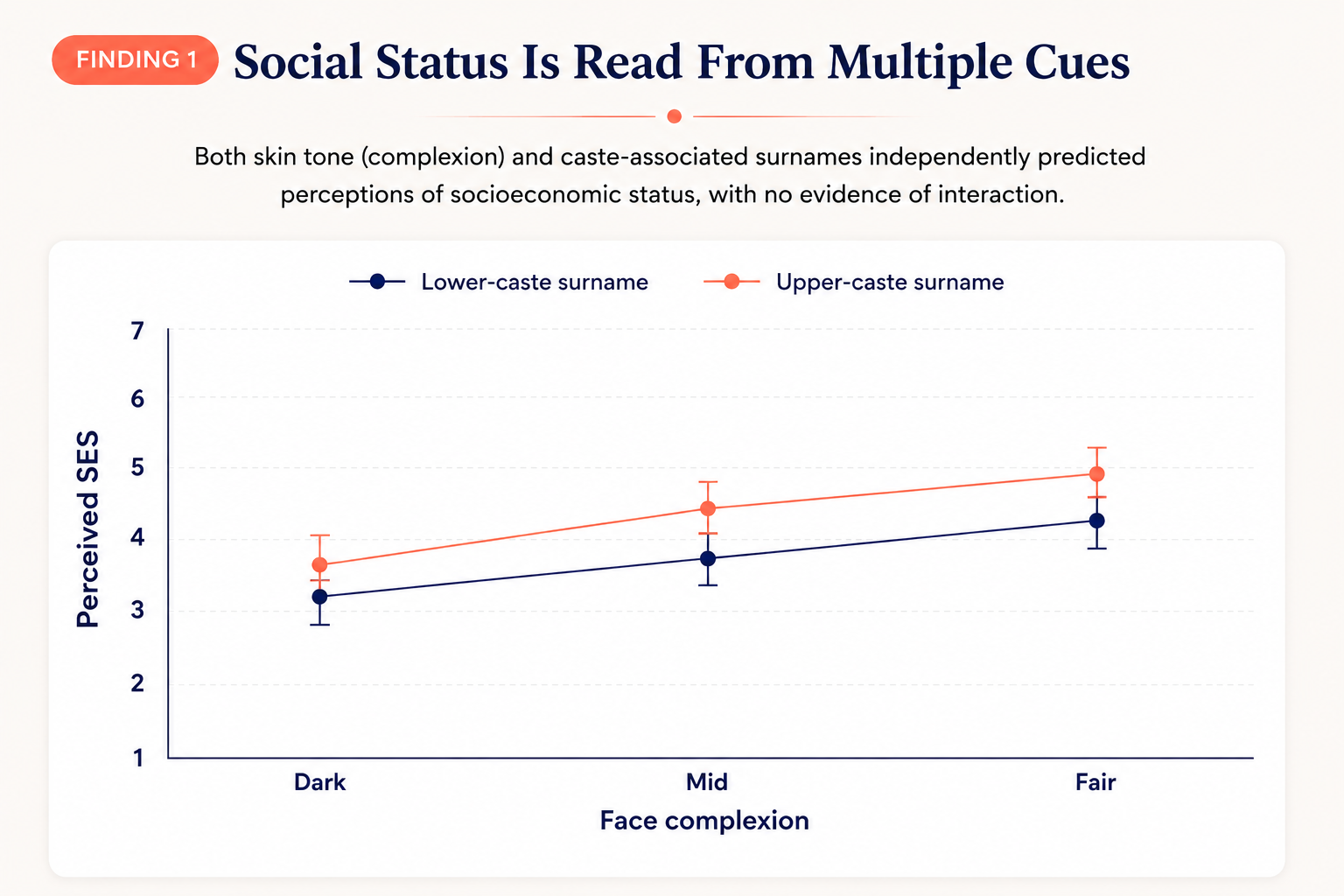
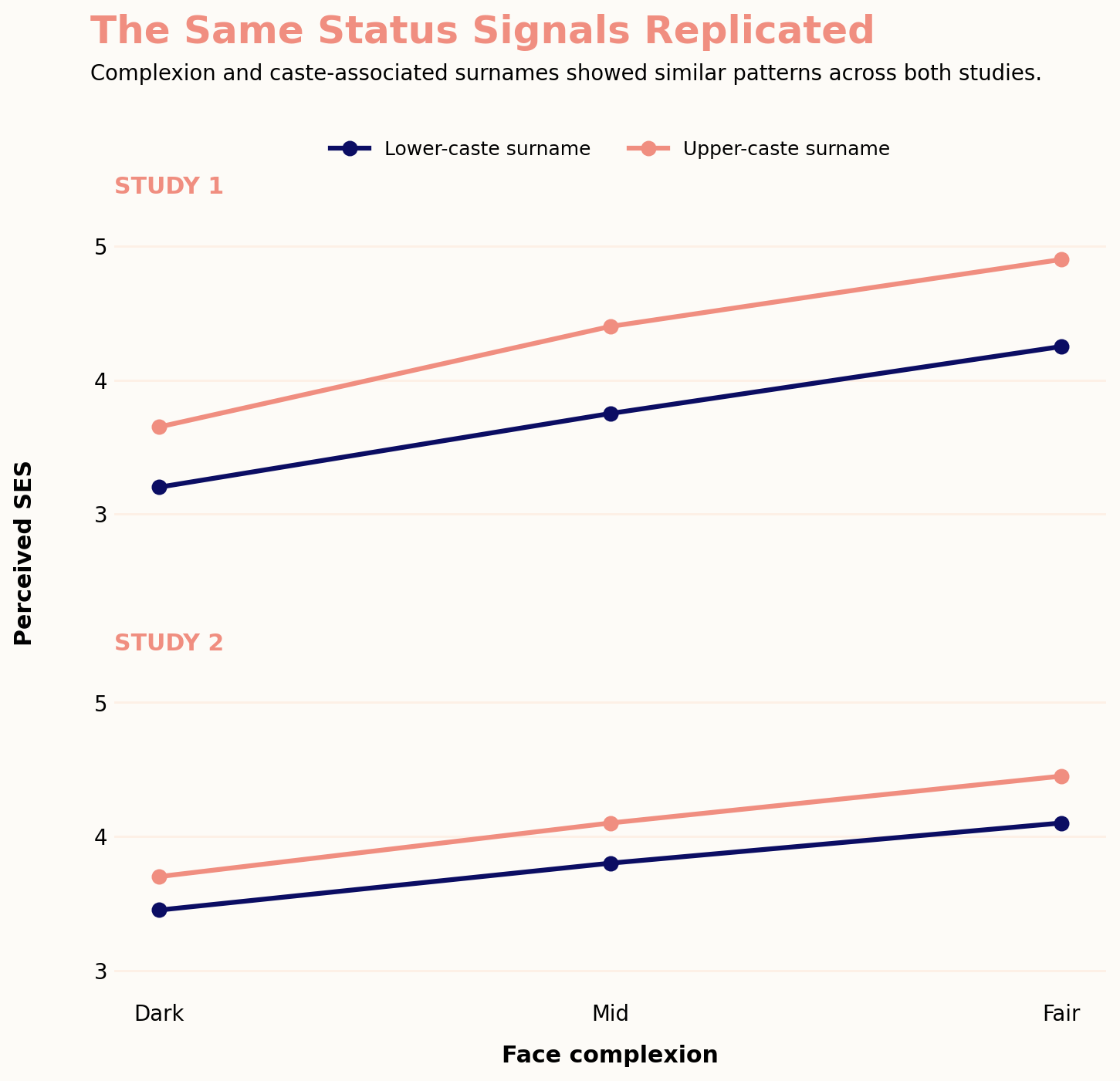
Both skin tone and caste-associated surnames independently shaped perceptions of socioeconomic status, with no evidence that the two cues interacted. Unlike many Western contexts, where names and skin tone can provide overlapping signals of racial identity, these cues carried distinct information about social status in India.
High Status Jobs = Higher Socioeconomic Bias
In our randomized controlled trial, skin tone—but not caste-associated surnames—predicted perceived job suitability. Darker-skinned candidates were evaluated less favorably for higher- and middle-status roles, in part because they were perceived as lower in warmth and competence. These pathways were weaker for the low-status role, suggesting that subjective social judgments may create greater opportunities for bias in evaluations for more desirable occupations.
Socioeconomic Bias Persisted Across Borders
Indians living in the UK showed similar patterns of socioeconomic judgment to those living in India. Acculturation did not meaningfully reduce the influence of skin tone or caste-associated surnames, suggesting that established social biases can persist even after exposure to a different cultural environment.
Why it Matters
Policy & Applied Impact: Translating behavioral diagnostics into more equitable hiring systems, inclusive labor-market policy, and bias-aware technologies.
Advancing Equitable Labor Markets: Identifies how culturally specific status signals—such as skin tone and caste-associated surnames—can shape socioeconomic judgments and persist across cultural contexts. These findings can inform international organizations working on social mobility, labor-market inclusion, and discrimination by identifying behavioral barriers that formal qualifications or access-focused policies alone may not address.
Building Fairer Hiring & Talent Systems: Shows how appearance-based bias can influence candidate evaluations even, partly through subjective judgments of warmth and competence. Organizations can use these insights to audit recruitment processes, standardize evaluation criteria, and identify stages where discretionary judgments create opportunities for bias.
Auditing Bias in AI-Assisted Hiring: Demonstrates that socioeconomic status can be inferred from multiple culturally specific signals that may not map neatly onto conventional demographic categories. This has implications for AI recruitment and screening systems, where models trained on historical evaluations or multimodal applicant data could reproduce subtle complexion- and caste-related inequalities even without explicitly using protected characteristics.
Selected Outputs

PRE-REGISTRATION [ VIEW PREREGISTRATION → Here ]
As. Predicted
Documented hypotheses, sample size calculations, and analytical plans prior to data collection across studies.

CODE & DATA REPOSITORY [ VIEW CODE AND DATA →
Available upon request ]
OSF Repository
Contains clean R scripts for linear mixed-effects modeling, mediation analyses, ggplot2 visualizations, signal detection analysis, t-tests, and anonymized raw datasets.

MANUSCRIPT DRAFT [ IN PREPARATION ]
Working Paper (Journal Article) "Names and Facial Complexion Independently Predict Impressions of Socioeconomic Status: Evidence from India" . Full manuscript detailing experimental methodology, multi-level mediation models, and theoretical implications (Available upon request).